
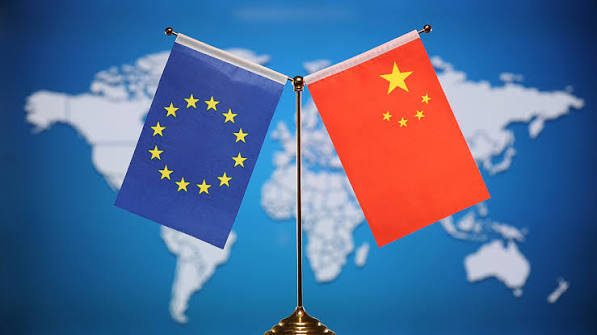
- The EU’s economic and trade policy toward China has hardened noticeably in 2026, marked by a string of defensive legislative moves – from the Cybersecurity Act to the Industrial Accelerator Act. What’s driving this shift, and how do you expect it to affect the EU’s own economic prospects?
Two levels must be distinguished. On one hand, forces advocating for greater ideological and geopolitical alignment with the United States are gaining traction within the EU, influencing its stance toward China. On the other, this hardening of attitudes stems from growing concern regarding Chinese production and export dynamics and their impact on Europe’s industrial structure. The crucial issue is the ability of European industry to compete in strategic sectors -such as automotive, green technologies, batteries, digital technologies, and certain industrial goods- against a China that possesses immense production capacity and holds a leading edge in these fields.
It is paradoxical that it was Trump who forcefully initiated the trade confrontation with China, whereas today the United States seeks common ground with Beijing. Europe, traditionally more averse to a confrontational approach, is now adopting a more active and defensive stance. This does not imply a complete rupture, as economic interdependence remains, along with areas where cooperation is essential. However, there is a growing consensus in Brussels that trade openness alone no longer guarantees a level playing field.
The challenge lies in striking a balance between protecting domestic industrial capabilities and preventing every conflict from escalating into a permanent confrontation. We likely face years of tension interspersed with periods of cooperation. Differences between China and the EU cannot be resolved through short-term measures. Europe needs to strengthen its competitiveness and economic autonomy without turning its relationship with China into a process of decoupling.
2. Brussels insists that these measures amount to “de-risking,” not “decoupling.” Where do you draw the line between the two? In strategic sectors such as semiconductors, artificial intelligence (AI) and green technology, do you see a real risk that de-risking gradually slides into decoupling – and what would that cost both economies?
The difference is clear in theory but difficult to establish in practice. “De-risking” entails reducing vulnerabilities without severing the economic relationship; decoupling implies a progressive separation of supply chains, investments, technologies, and, ultimately, markets. The crucial question is where to draw the line and who decides what constitutes a strategic risk.
In sectors such as semiconductors, AI, or green technologies, this boundary is particularly problematic, as the economic dimension intertwines with the technological and -increasingly- with national security. There is a risk that the “strategic” label could expand to encompass an ever-larger share of the relationship with China.
This raises the possibility of a gradual drift—not driven by an explicit political decision to break ties, but rather by an accumulation of export controls, investment restrictions, security requirements, conditional subsidies, and trade defense measures. While each individual measure may be justifiable, the aggregate result could be a far more fragmented economic relationship.
Broad decoupling would entail costs for both economies. For Europe, it would mean higher production costs, a loss of economies of scale, and a slower, more expensive green transition. For China, it would mean losing access to a key market and accelerating trade diversification. The cost would not be merely bilateral; significant decoupling would result in a less efficient—and, paradoxically, less resilient—global economy.
De-risking should be subject to defined limits, transparent criteria, and periodic review. If everything is strategic, nothing truly is. The goal is not to eliminate interdependence with China, but to learn how to manage it.
3. From the domestically developed large aircraft and the expansion of China’s large vessel fleet to breakthroughs like DeepSeek and Unitree Robotics that have captured global attention, China’s innovation achievements have been making headlines. How do you assess China’s progress in scientific and technological innovation in recent years? Could you elaborate with your own experience – for instance, which innovative product from China has impressed you the most?
We are witnessing one of the most significant shifts in the Chinese economy in recent decades. China can no longer be viewed merely as the “world’s factory,” simply adopting technologies developed elsewhere. In reality, it is progressively building its own innovation ecosystem—one that combines scientific research, engineering, manufacturing capacity, capital, a vast domestic market, and strong state intervention.
Yet, perhaps the most interesting aspect is not its standing in rankings, but rather its ability to transform knowledge into products. Here, China demonstrates a particularly potent combination of research, engineering, large-scale production, and a massive domestic market that enables experimentation, cost reduction, and the rapid diffusion of innovations.
This is evident across a wide range of fields—from aeronautics (such as the C919 aircraft) and shipbuilding to electric vehicles, batteries, solar systems, and specific storage technologies—all of which showcase an ability to integrate innovation, production, and market reach at a pace that is impossible to ignore. The same holds true for artificial intelligence and robotics.
If I had to single out the developments that have impressed me most, I would not necessarily choose just one. I am particularly struck by those that combine advanced technology with mass production capabilities: electric vehicles and their batteries, solar technology, drones, robotics systems, advances in artificial intelligence, and, of course, shipbuilding and aerospace. These are sectors where China not only innovates but also rapidly scales that innovation up to an industrial level.
4.China and the EU are two of the world’s major economies, and their economic and trade ties have long been described as the ballast of the relationship. How do you assess the current state of these ties? And where do you see the most promising areas for practical cooperation going forward?
The economic relationship between China and the European Union remains extraordinarily important, yet it is no longer as straightforward as it was in past decades. There is deep interdependence. China remains the EU’s primary supplier of goods, while Europe constitutes a key market for Chinese companies.
I would not describe this as a relationship in decline, but rather one that is changing in nature. Interdependence persists, but it is now accompanied by concerns within the EU that require balancing two seemingly contradictory objectives: reducing specific dependencies while simultaneously preserving the economic relationship.
Where do I see the greatest potential for cooperation? First, in the green transition; both sides have a clear interest in accelerating decarbonization, developing renewable energy, improving energy efficiency, and advancing technologies related to storage, the circular economy, and carbon management. Second, in specific technological areas that yield global benefits without impinging on the most sensitive technologies—such as artificial intelligence—provided that trust-building mechanisms and clear rules are established. The new China-EU trade dialogue already includes plans to expand cooperation on AI and the green transition.
I also see opportunities in services, health, scientific research, transport, aviation, the blue economy, and the digital economy. Cooperation on norms and standards is a particularly important area, where dialogue can help prevent global technological fragmentation.
Europe relies on China for certain technologies, raw materials, and industrial supply chains; China relies on Europe as a market and a source of technology, investment, and specialized expertise. This interdependence is not necessarily a weakness; on the contrary, it can serve as an incentive for negotiation. The challenge lies in building a new architecture of interdependence, based on the premise that both parties are too important to one another—and to the global economy—to allow every disagreement to escalate into a crisis. It is not a matter of choosing between cooperation and competition, but of managing both simultaneously.
5.You have had extensive engagement with China and have been involved in promoting China-EU cooperation for many years. How has your own understanding of China evolved over time? At this important juncture, if you were to introduce today’s China to the European public, what would you most want people on both sides to understand about each other?
Constant change has characterized China’s development over the past few decades. Yet this change unfolds within a framework of unchanging constants that are crucial to identify and acknowledge. I am not referring to the political or ideological context, but rather to cultural and historical dimensions—factors that gain significance as the country’s transformation deepens.
For Europe, the key lies in accurately assessing the true scope of the Chinese approach, which prioritizes cooperation over rivalry and dialogue over confrontation. It is not in China’s interest for its own success to spell failure for the EU; on the contrary, the EU’s success is highly useful and beneficial to China. This perspective is rooted in culture and is, therefore, more profound than any short-sighted approach. To successfully navigate this juncture, we need vision, as well as a climate where trust and reciprocity prevail.
Podes deixar aquí un comentario sobre o artigo