
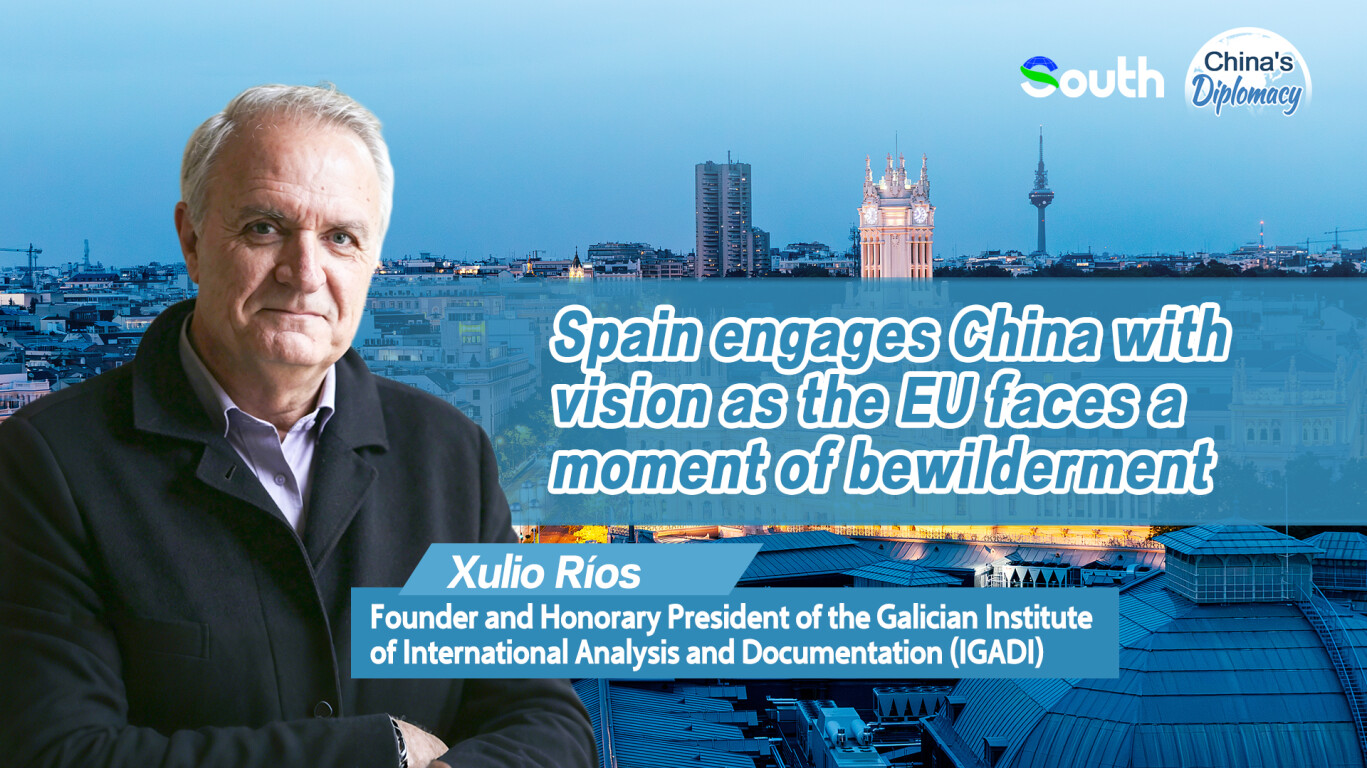
Scheduled for April 11 to 15, Sánchez’s fourth trip in as many years comes roughly one month before U.S. President Donald Trump’s planned journey to China. For Ríos, the timing sends an unmistakable signal.
“China remains very present on Pedro Sánchez’s geopolitical radar, and Spain’s strategic commitment to China is firm and determined,” Ríos says. “This frequency of high-level contacts builds and reinforces bilateral trust. This receptiveness helps consolidate the commitment to strategic autonomy in our foreign policy, in which the relationship with China plays a significant role.”
A relationship forged over years
The foundation for this deepening partnership has been laid patiently. Spanish government sources outline three clear objectives for Sánchez’s agenda: attracting greater Chinese investment, securing a more favorable operating climate for Spanish firms in China, and expanding market access for Spanish exports, especially in agriculture and automotive parts.
Much of this foundation is already yielding results. A new Asia-Pacific Strategy unveiled in February by Foreign Minister José Manuel Albares confirmed that China overtook both Germany and France last year to become Spain’s largest single supplier. The document stresses that competitiveness in the Chinese market will remain a key priority.
That momentum received royal support last November, when King Felipe VI and Queen Letizia conducted the first state visit by a Spanish monarch to China in 18 years. The trip yielded ten bilateral agreements and, in the King’s words, a reaffirmation that friendship between the two nations serves both their peoples and their global visions.
Ríos sees the economic dialogue advancing with clarity of purpose. “We know each other well in the sense that the economic sectors of the greatest commercial or investment interest are clearly identified,” he explains. “Progress has been made in that direction. Bilateral relations are advancing steadily, which is a positive sign.” He adds that China fully comprehends the roadmap, “I believe China understands this, and that this element features prominently on the bilateral roadmap.”
Diverging from Brussels, aligning with peace
Sánchez’s journey unfolds against a tense geopolitical backdrop. In the Middle East, the threat of wider conflict and potential disruption in the Strait of Hormuz has unsettled global markets. While Washington has projected military assertiveness, Madrid has chosen a markedly different path.
“Spain has not hesitated to express its rejection of the ‘peace through strength’ approach,” Ríos states. “It has likewise condemned the systematic destruction in Gaza and Lebanon, not only in Iran. It has also denied the United States the use of its military bases or airspace. These decisions have the support of Spanish society.”
He argues that this posture is more than tactical, “This rejection of bloc logic and confrontation, and the avoidance of automatic alignment with the U.S., is an expression of a de facto pursuit of strategic autonomy—one that is gaining increasing traction within the EU and earning sympathy globally.”
This stance finds resonance in Beijing. Chinese Foreign Ministry spokesperson Mao Ning declared four weeks ago that military actions against Iran violated international law and that trade should not be wielded as a weapon—a position Madrid has responded to positively. Ríos draws a direct line between these parallel outlooks, “Indeed, the defense of international law, dialogue, multilateralism, and stability brings us much closer to China.”
Spain as a bridge in a bewildered Europe
As Ríos observes, Spain’s contrast with the broader European disposition could hardly be sharper. While EU institutions grapple with de-risking doctrines and electric vehicle tariff disputes, Sánchez has positioned himself as a consistent voice for reducing overreliance on Washington and cultivating diversified global ties.
“The EU is experiencing a moment of bewilderment,” Ríos observes bluntly. “The depth of the historic turning point we are living through is significant. It struggles to interpret and unify positions based on national interests—which are not always aligned—as well as the ideological conservatism currently dominant in the EU, and external pressures that many regard as unquestionable in advocating for automatic alignment with the U.S. The weakness of EU leadership is palpable.”
In his view, Spain’s approach is gaining ground, “I believe Spain defends the right position, and more countries are increasingly supporting it.”
The institutional depth of Sino-Spanish ties continues to grow. Since 2018, ten agricultural export protocols—covering goods from pork to cherries—have been inked, and these accords proved vital during the African swine fever crisis, when they prevented a complete suspension of Spanish exports. For Ríos, this level of engagement elevates Madrid’s role precisely when Europe appears adrift. “This depth of Sino-Spanish relations, along with less reliance on the interpretative frameworks coming from the U.S., reinforces Spain’s role as a bridge in improving EU–China relations,” he says. “And it is foreseeable that its influence will grow.”
The tangible impact of sustained engagement
For Spanish society, the dividends of this diplomatic persistence are no longer abstract. Chinese investment surged by 331 percent last year—a statistic that underscores the tangible benefits of a relationship Madrid has cultivated with patience and strategic intent.
Yet Ríos insists the deeper significance lies elsewhere. “Cooperation with China has contributed to Spain’s economic prosperity and can help us avoid falling behind in the technological and industrial transformation,” he notes. “The comprehensive strategic partnership is an evolving framework. Moreover, Spanish society increasingly recognizes that we can and must contribute to global systemic stability, and the Spain–China relationship can have a significant expansive effect.”
When asked what broader lessons Spain’s course offers a hesitant Europe, Ríos returns to the necessity of foresight.
“We need to think with vision,” he says. “The shift in the relationship with the U.S. is not temporary. It is not about Trump. It is about the stubborn adherence to an idea of exclusionary hegemony that no longer corresponds to global reality. We must recognize multipolarity and contribute to managing it in a constructive and institutional way. This approach will ultimately prevail because it is the only truly viable one. Spain understands this.”
Reporter: Guo Zedong
Cover: Lai Meiya
Nanfang Media Group, South China’s Guangzhou.
Podes deixar aquí un comentario sobre o artigo